Alzheimer's disease is a degenerative disease of the brain that causes thinking and memory to become badly impaired. Alzheimer’s disease takes you from intellectual and social abilities and gets in the way your typical life. In the present day, there are about 4.5 million Americans have Alzheimer’s disease. This usually affects seniors over the age of 65. As the population is aging the number of Alzheimer’s disease victims is expected to quadruple as well.
For all we know so well, Alzheimer’s disease has no cure yet. Yes, there is development being made by researchers to improve the quality of life for those who have Alzheimer’s. On the other hand, drugs are being discovered and studied which may lead to treatments of this incurable disease.

Showing posts with label Alzheimer's disease. Show all posts
Showing posts with label Alzheimer's disease. Show all posts


Information of Alzheimer’s disease for the Patients and Families
As we all know well, Alzheimer’s is a disease that implications are still being felt with millions of people around the world caught in its grasp. Creeping in and slowly removing an individual’s ability to remember, function and even recall their own family and friends, this situation is such a horrible thing that can crash not only the affected patients, but also everybody around them unfortunately. With this, it is very important for people faced with this kind of condition to equip themselves with solid Alzheimer’s disease information and relevant facts.
Regardless of its prevalent reach, there are a lot of mythologies that encases Alzheimer’s. As having right Alzheimer’s disease information, this won't likely provide a family with the relief it may be need following a diagnosis, it can any way help them better recognize the condition and what to expect with Alzheimer’s disease though. Sorting out the fact from the fiction is very significant for those who need to make decisions about future care and probable treatments and cures.
* Loss of Memory is just normal. Yes, it may be normal to become a little forgetful at times as we grow old, but serious loss of memory is no longer normal. Whichever severe loss of memory, such as that related with Alzheimer’s or other forms of dementia, is not normal under any condition.
* Aluminum causes Alzheimer’s. Evidently, there is no known cause for this condition for the real Alzheimer’s disease information to be had. There are some potential associations, but affirmation has not been done. Regarding to aluminum in particular, studies were not able to find out a real linkage between drinking out of cans and contracting Alzheimer’s. The respiratory tract infection blast gossip also may not seem to be factual.
* The condition is not deadly. This is a false part of Alzheimer’s disease information. Even as it is more possible that other conditions will occur that can be deadly ahead of the deterioration progresses to the parts of the brain that control major bodily functions, the disease is well thought-out deadly in and of itself by many experts.
* Diet soda causes Alzheimer’s. This is another misleading notion. The U.S. Food and Drug Administration has been studying this assertion since some scientists raises concerns about NutraSweet and Equal, but no link has been found as of up till now.
* Alzheimer’s can be stopped in its succession. Sad to say, this is not true. Even as there are some treatments that might slow the steady rate of succession, preventing it is not possible at the moment. It might even be likely to even out a patient for a moment, but no treatments have confirmed effective over the long haul.
Alzheimer’s disease information available thus far doesn't provide a lot of answers for patients and their families that might be exerting to come to hang on with a diagnosis. The truth is that, there is still a lot to learn about this condition and with how small is really identified, many mythologies seem to succeed.
Alzheimer’s disease patients and their families with queries and concerns should ask for medical advice. There are even some very good support groups for those impacted by such inexplicable and distressing condition.
Regardless of its prevalent reach, there are a lot of mythologies that encases Alzheimer’s. As having right Alzheimer’s disease information, this won't likely provide a family with the relief it may be need following a diagnosis, it can any way help them better recognize the condition and what to expect with Alzheimer’s disease though. Sorting out the fact from the fiction is very significant for those who need to make decisions about future care and probable treatments and cures.
Take a look at some of the mythologies that at times prevent the real Alzheimer’s disease information from dodging;
* Loss of Memory is just normal. Yes, it may be normal to become a little forgetful at times as we grow old, but serious loss of memory is no longer normal. Whichever severe loss of memory, such as that related with Alzheimer’s or other forms of dementia, is not normal under any condition.
* Aluminum causes Alzheimer’s. Evidently, there is no known cause for this condition for the real Alzheimer’s disease information to be had. There are some potential associations, but affirmation has not been done. Regarding to aluminum in particular, studies were not able to find out a real linkage between drinking out of cans and contracting Alzheimer’s. The respiratory tract infection blast gossip also may not seem to be factual.
* The condition is not deadly. This is a false part of Alzheimer’s disease information. Even as it is more possible that other conditions will occur that can be deadly ahead of the deterioration progresses to the parts of the brain that control major bodily functions, the disease is well thought-out deadly in and of itself by many experts.
* Diet soda causes Alzheimer’s. This is another misleading notion. The U.S. Food and Drug Administration has been studying this assertion since some scientists raises concerns about NutraSweet and Equal, but no link has been found as of up till now.
* Alzheimer’s can be stopped in its succession. Sad to say, this is not true. Even as there are some treatments that might slow the steady rate of succession, preventing it is not possible at the moment. It might even be likely to even out a patient for a moment, but no treatments have confirmed effective over the long haul.
Alzheimer’s disease information available thus far doesn't provide a lot of answers for patients and their families that might be exerting to come to hang on with a diagnosis. The truth is that, there is still a lot to learn about this condition and with how small is really identified, many mythologies seem to succeed.
Alzheimer’s disease patients and their families with queries and concerns should ask for medical advice. There are even some very good support groups for those impacted by such inexplicable and distressing condition.
Alzheimer’s Diagnosis
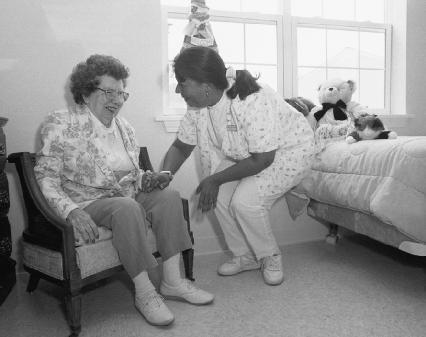
We all know so well that Alzheimer’s disease is difficult to diagnose. Still up till now, the only certain method of Alzheimer’s diagnosis is made after the patient's death through brain biopsies. While this is a certain method, it is totally nostalgic just like an autopsy. What are we needed for real are highly developed tests and markers in the future.
The conventional working method for Alzheimer’s diagnosis by a process of elimination is done with living patients. They thoroughly test for and eliminate each of the many aspects that could possibly be responsible for the visible, behavior-related warning signs. In the event that these possibilities are eliminated, then Alzheimer’s is the only remaining possibility and a diagnosis can be done.
Many researchers have been experiencing hardships at work developing methods and markers for early and certain detection of the early stages of the Alzheimer’s process of neurological degeneration. The target was to find Markers, be it biochemical, genetic or physical, with high link to the inception and succession of this disease.
The target is basically to know how to see it coming and measure its succession, so that various new treatments can be started as early as possible. For this reason, their effects on the disease in the patient can be measured to test effectiveness, to try different doses and then measure the results on it.
Genetic indicators have been found, biomarkers are being developed and brain scan technology is constantly improving. These important progresses are being made in the area of Alzheimer’s diagnosis.
* Genetic. There was a set of people at the Translational Genomics Research Institute in Phoenix, Arizona has found a gene called GAB2. You are at far higher risk of eventually developing Alzheimer's if you have a damaged version of it. The team is now functioning to build up a fast and simple test to detect the damaged gene.
It is better known that identification of the presence of the gene would make out people who are in danger for the disease shortly in their lives. Even before it starts, it may sooner or later help us to diagnose Alzheimer’s disease.
Biomarkers. Nanogen, Inc., in San Diego, California-based highly developed technology company works to provide researchers, clinicians and physicians with enhanced methods and apparatus to guess, make a diagnosis, and in due course facilitate to treat disease.
Early in 2007, Nanogen, Inc. declared having received two patents that relate to the identification of protein biomarkers for Alzheimer’s disease. They would have had to demonstrate something that is new, unique and that works to get a patent.
There are non-intrusive methods let physicians have a picture of the living brain itself. And these are; brain scan tests, such as computerized tomographies (CT) scan which is the most commonly used, magnetic resonance imaging (MRI) scan, or positron emission tomography (PET), along with Single Photon Emission CT (SPECT).
Owing to these scanning technologies, these enable health care professionals to see malfunctions within the brain. Even as these technologies made available for the professionals in helping Alzheimer’s diagnosis, they still exert effort to get and present good, clear pictures and information. On the other hand, these are constantly being improved.
But still the current level and intensity of the investigation, and the visible progress that is being made, are hopeful indications. With any luck we will have much better methods for early Alzheimer’s diagnosis and treatment in the long run.
The Facts of Alzheimer’s Disease

Take a look at this, a member in your family has Alzheimer’s disease, and you’ve been gathering info about this incurable Alzheimer’s disease to help you make decisions of to do then, however everything you find is so scientific and difficult. How can you explain to your kids why their grandfather doesn’t recognize them any longer? An Alzheimer’s disease fact below is designed for the children and families to help them understand what Alzheimer’s is all about.
Alzheimer’s: What Is It?
Alzheimer’s disease is a form of a mental disorder known as dementia. Dementia is a brain disorder that seriously slow downs the brain’s ability to process normal thinking and slow downs the daily activities of its victims. Therefore, Alzheimer’s disease affects the part of the brain that is responsible for memory, thought, and language.
For the longest time, it was thought that nothing is possible to prevent this dreadful disease and that it was simply something that people had to expect when they reached their golden years. For all we know, Alzheimer’s disease steals from millions of people each year of their memories, their personalities, and the ability to fulfill day to day activities. On the other hand, new research points out that there are numerous techniques to prevent Alzheimer’s disease.
Memory loss is the hallmark sign of Alzheimer’s disease. Generally, those 65 years of age or older start to worry themselves with this disease at the first stages of forgetfulness. Forgetfulness is even though a sign of Alzheimer’s disease, it is important to take notice of that there are other signs that may be a sign of the onset of this disease. Thus, being clued-up about Alzheimer’s through demonstrated indications, and is paramount for our loved one’s wellbeing as well as our own.
How to Deal With Alzheimer’s
It can be emotionally devastating moment in anyone’s life if you hear the news that a family member has received an Alzheimer’s diagnosis. However, the patient must go through various laboratory tests, such as medical assessments and laboratory measurements before the Alzheimer’s diagnosis can be given to the patient and their family. There is no single test existing that will categorically give the Alzheimer’s diagnosis.
Diagnosticians have been able to work out a set of Alzheimer’s disease testing tools that can detect warning signs of Alzheimer’s disease in its earlier stages with this hands-on standpoint. Up till now, there is no single analytical test that is able to determine if a person does really have Alzheimer’s disease, but the succession of testing that is available makes it possible for physicians to diagnose it with about 90 % accuracy. To ensure accuracy and proper diagnosis of Alzheimer’s disease, the testing can take anywhere from one day to several weeks.
Sometimes an Alzheimer’s test isn’t necessary. But mostly an Alzheimer’s test is important to make certain that the person isn’t just undergoing the usual memory loss associated with aging. Alzheimer’s disease doesn’t just affect one’s memory; it can make them see things that aren’t there and even drive them into piercing hysterics.
If you are thinking of a loved one who is starting to experience other warning signs of dementia, you may want that person to go through Alzheimer’s testing for sure. Unluckily, there is no current ultimate test for Alzheimer’s disease that a person can go through. The only way doctors diagnose Alzheimer’s with 100% sureness is during physical test of the brain after the person’s death. What you want to try to find is some type of psychological and behavioral screening together with extensive tests to rule out other types of dementia more willingly than Alzheimer’s testing.
How to Live With Alzheimer’s
Living with Alzheimer’s can be a devastating experience for both the disease victim and the family involved. Along with are moments of misunderstanding or uncertainty for most and the warning signs can develop into exasperating and complicated. The memory loss and other related factors can often root immense separation in families and can create a tension on relationships which could not happen if you are involved and well-informed with information about this enigmatic disease.
Having someone with Alzheimer’s to take care can be an intimidating task. You will need to have all of the support you can acquire all the way, along with the most recent and most important Alzheimer’s info and research. It could be a confusing moment in time, and the more you get discerned, the more assertive you will feel in your ability to provide best possible care and support for your loved one.
--Picture courtesy of alzheimersfdc.org
Subscribe to:
Posts (Atom)